Research
Apr 1, 2026
Frac Stage Placement Is a Data Problem, Not Just an Engineering One
The gap between what spacing models assume and what the reservoir shows is where production variability begins.
.webp)
The gap between what spacing models assume and what the reservoir shows is where production variability begins.
A completion engineer working on stage placement is making one of the most consequential decisions in a well's life. Get it right, and the lateral produces consistently across its entire length. Get it wrong, and you have a wellbore full of stages that are either underperforming or not contributing at all, with no easy way to fix it after the fact.
The engineering side of that decision is well understood. Lateral length, perf cluster spacing, and mechanical stage count all have established frameworks built from years of field experience. What often gets treated as secondary, and shouldn't be, is the data side. Stage placement is an engineering execution, but it's a data problem first.
Completion engineers are working with a set of inputs that describe the wellbore mechanically: where the lateral lands, how long it runs, and what the stress profile looks like. Those inputs are necessary, and they set the boundaries of what is physically possible in the completion design.
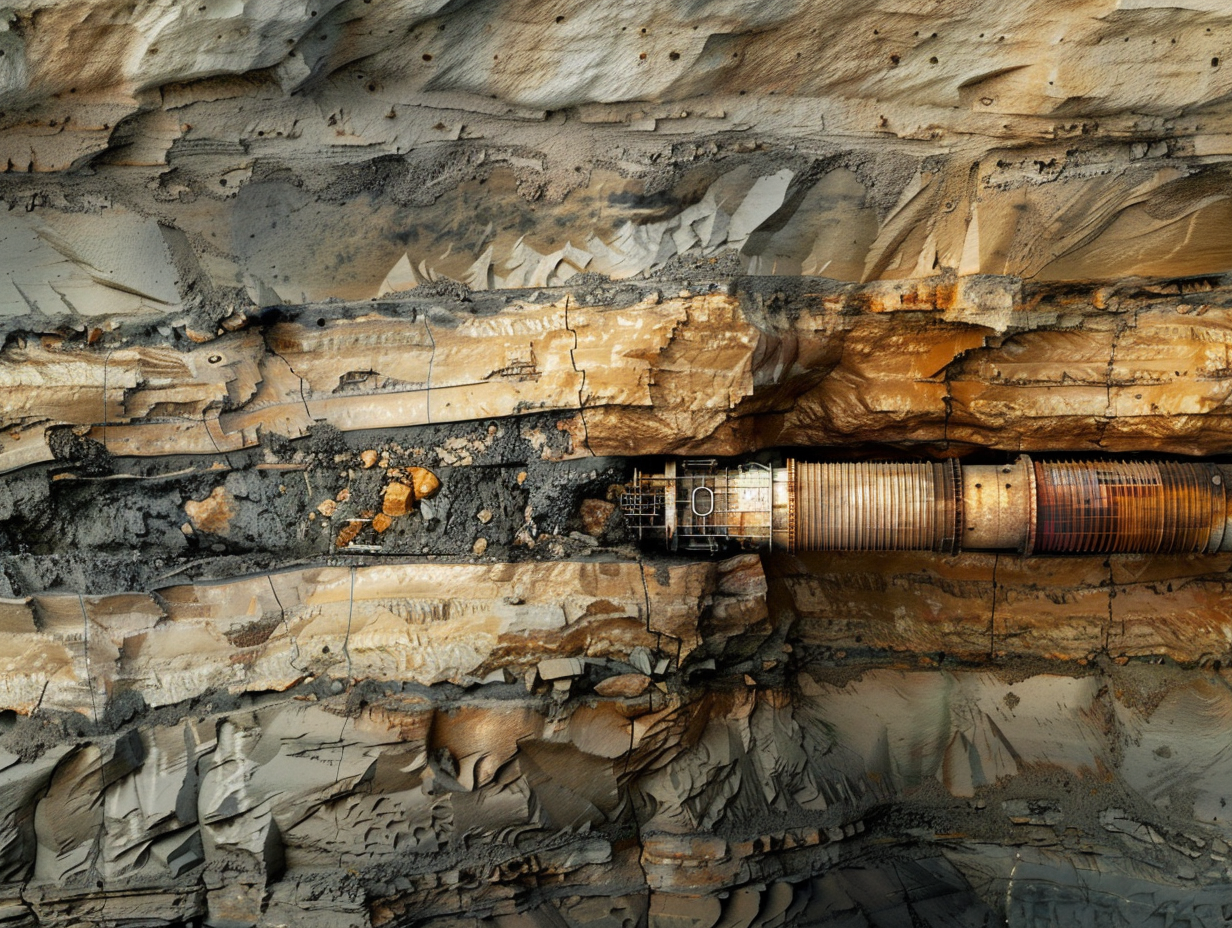
What they don't describe is what the rock is actually doing zone to zone along that lateral. A spacing model treats the wellbore as relatively consistent unless something tells it otherwise. In unconventional reservoirs, that assumption is where production variability begins. Two intervals sitting 500 feet apart on the same lateral can have meaningfully different porosity, fluid saturation, and producibility. A spacing-based approach has no way of knowing that without data to tell it.
The engineering framework isn't the problem. The problem is asking it to make decisions it wasn't designed to make on its own.
The data inputs that should inform stage placement decisions reveal reservoir characteristics that no mechanical model can surface on its own. For instance:
Each of these inputs answers a different question about the same section of rock. Together, they build a picture of lateral heterogeneity that tells the completion engineer where stages are likely to perform and where they are likely to underperform before a single perf cluster is designed.
The strongest completion designs are built when the engineering framework and the data picture are developed together rather than sequentially. When a completion engineer has access to isotope-based reservoir fluid charging signals and producible zone identification before stage placement is finalized, the design changes in specific and meaningful ways.
Stages get concentrated where the data shows the strongest reservoir signal. Intervals with weak porosity or unfavorable reservoir fluid charging indicators get treated differently or deprioritized. Cluster spacing decisions get anchored to geochemical boundaries rather than uniform length assumptions. The result is a lateral that's completed based on what the rock is doing rather than what the spacing model assumes it’s doing.
Before the next stage placement decision gets finalized, it's worth asking a few direct questions about what data is actually driving it:
These aren't questions that challenge the engineering. They're questions that audit how complete the data picture is before the engineering locks in. A completion engineer with strong answers to all three is working from a fundamentally stronger foundation than one who isn't.
Completion engineering has the frameworks, the experience, and the execution capability to design effective stage placements. What it needs alongside those frameworks is a data picture detailed enough to show what the lateral is actually doing before the design is finalized. That gap between what the engineering assumes and what the reservoir is showing is exactly where production variability is born.
The gap between what a spacing model assumes and what the reservoir is actually showing is a solvable problem. If your team wants to dig into what that looks like for your laterals, send us a note at info@mcwlinc.com or connect with us on LinkedIn.
Discover how our expertise can elevate your operations. Contact us today to explore tailored geological solutions.


.png)